Pick the exact still you want the clip to preserve. Write one sentence for the details that should stay fixed and another for the only movement you want. Dreemy’s FAQ describes animating still images. The terms leave generation consistency open, so the last frame deserves as much attention as the opening.
Mark the three details that carry the scene
Imagine an original adult lighthouse keeper in a yellow coat holding a brass key and a lantern. The yellow coat identifies the keeper, the key matters in the next scene and the lantern supplies the light. Background bricks can vary a little. A missing key would change what can happen next.
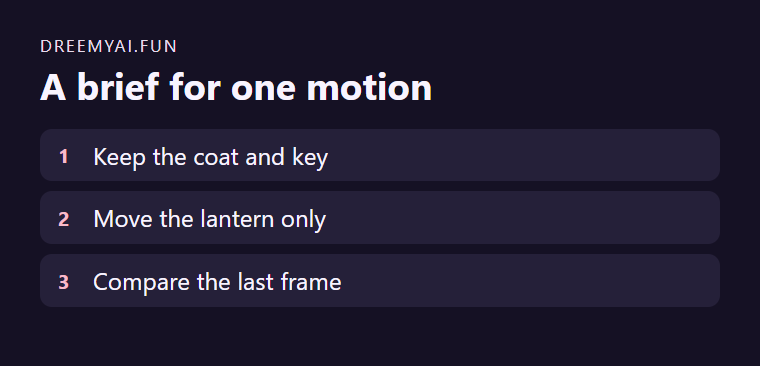
Before creating the clip, save the selected still under a meaningful local name. Put the fixed details into the motion brief: “Keep the yellow coat, brass key and stone doorway. The lantern swings once. Hold the camera in place.” This is sample wording for a fictional scene, with no pictured real person needed.
Check the middle and end against the still
Watch the clip once without pausing. On a second pass, stop around the swing and at the end. Check whether the key is still in the same hand, whether the coat keeps its shape, and whether the swing is legible. An object lost during motion can reappear by the final frame. That is easier to spot when you know which prop matters.
If the scene fails the check, reduce the movement before rewriting the character description. A small lantern swing and steady camera give you fewer changes to inspect. If the key still disappears, keep the chosen image as the scene reference and leave the clip out of the sequence.
Use a fictional subject or inputs you have permission to use. Keep one approved still and one motion brief together so you can tell which version the next shot should follow.